
Notes from the DMARCify team
Mostly hands-on email-auth writing. Occasionally an opinion. Always something you can act on the same afternoon.
 Tech7 min read
DKIM CNAME delegation: the vendor convenience that needs an offboarding plan
Delegating a DKIM selector to a sending vendor makes key rotation easy, but it also delegates part of your domain's authentication path. Here is how to govern it safely.
A DKIM CNAME is a controlled delegation, not a harmless DNS shortcut. Inventory every selector, name an owner, monitor the target, and remove it when the vendor relationship ends.Read the post Playbook4 min read
DMARC passes, but your email lands in spam: what to check next
A green DMARC result confirms domain authentication, not inbox placement. Separate authentication, receiver acceptance, and mailbox evidence to troubleshoot missing mail.
Use DMARC reports to investigate authentication. Use sending logs and recipient-side evidence to investigate delivery. A passing result alone cannot tell you where a message landed.Read the post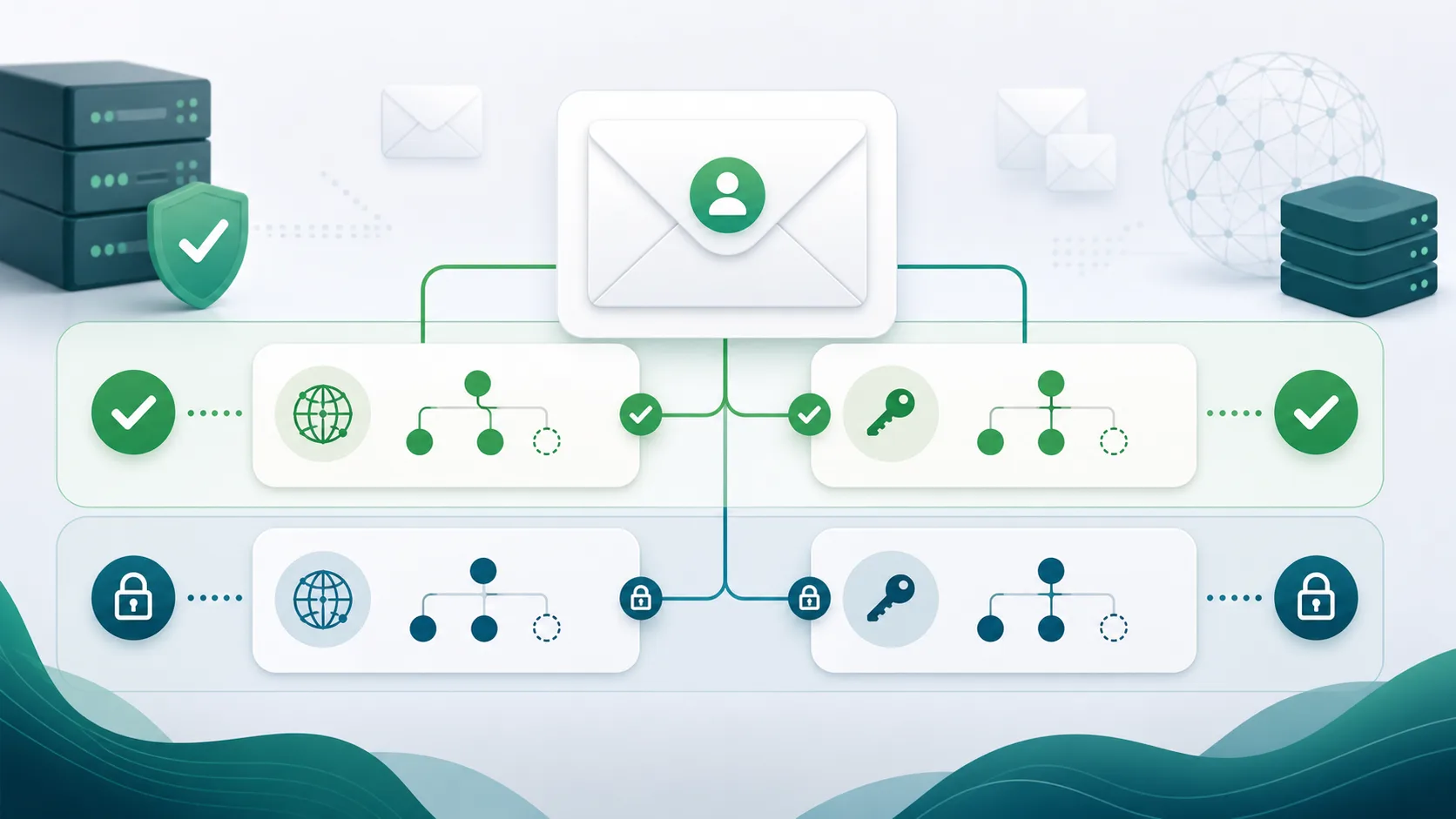 How DMARC works7 min read
DMARC alignment: relaxed vs strict without the false alarms
DMARC does not only ask whether SPF or DKIM passed. It asks whether the passing domain aligns with the visible From domain. Here is how relaxed and strict alignment really behave.
Relaxed alignment is the DMARC default for good reason: it lets legitimate subdomain-based mail streams pass while still tying authorization to the same organizational domain. Strict alignment is useful only after reports prove every legitimate sender can match the exact From domain.Read the post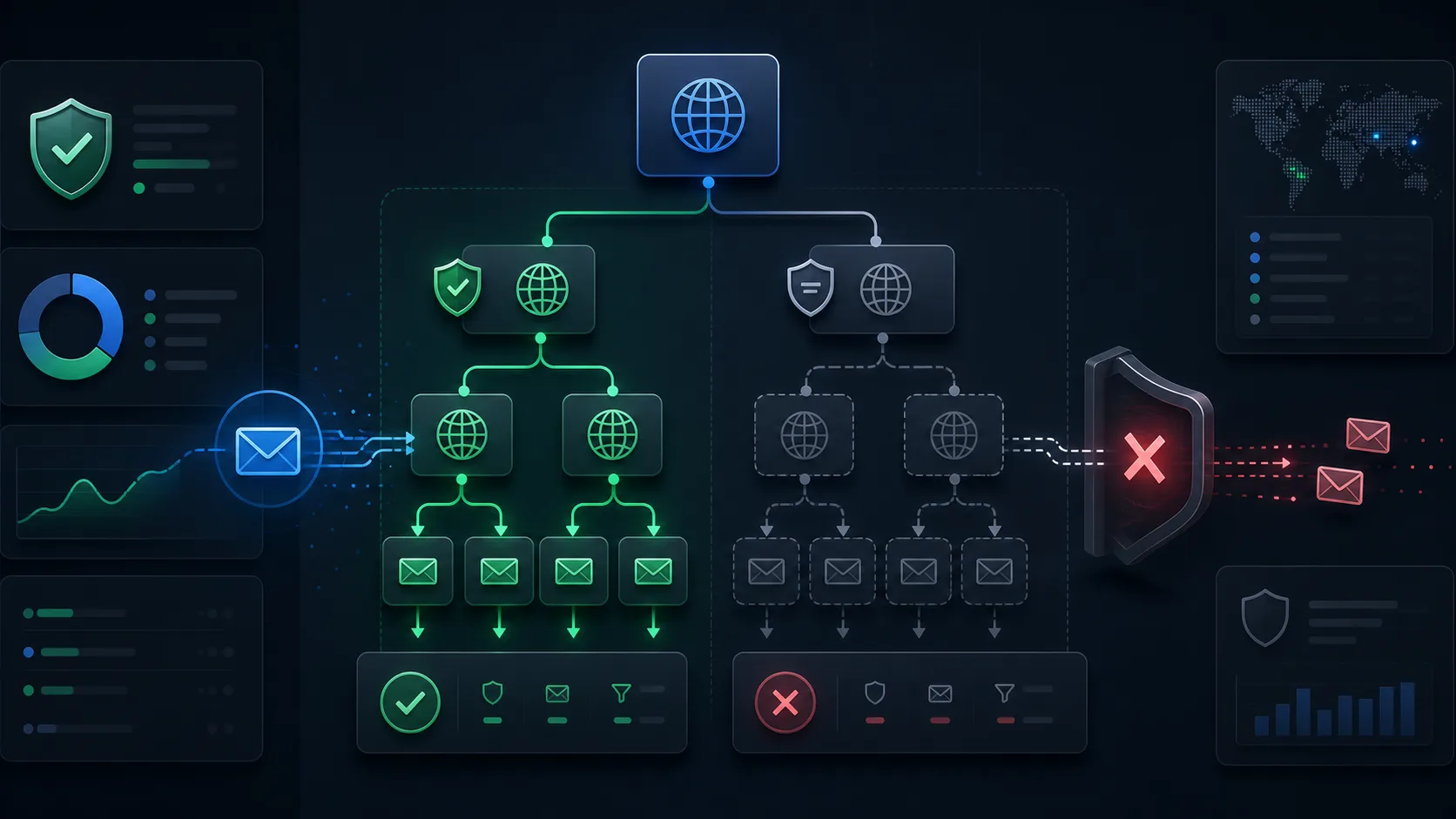 Tech7 min read
DMARC subdomain policy: when p, sp, and np actually apply
RFC 9989 makes subdomain policy more explicit. Here is how p, sp, and np interact for organizational domains, existing subdomains, and names that do not exist in DNS.
Use p for the domain itself, sp for existing subdomains that do not publish their own DMARC record, and np for non-existent subdomains. If you omit sp or np, receivers fall back to p where applicable.Read the post Tech7 min read
Why your DMARC reports stop when rua points to another domain
Putting a vendor mailbox in rua is not enough. RFC 9990 requires external report destinations to authorize the relationship in DNS before compliant receivers send aggregate reports.
External DMARC reporting is a two-domain contract. The policy domain asks for reports with rua, and the destination domain must publish the DNS proof that it is willing to receive them.Read the post Tech7 min read
DMARC failure reports: useful, sensitive, and usually not your dashboard
RUF reports promise message-level detail, but RFC 9991 is explicit about the privacy tradeoff. Here is when to request them and when aggregate reports are the better operating view.
Treat RUF failure reports as a short-lived diagnostic instrument, not the normal DMARC dashboard. Aggregate reports give the operating view without exposing message-level content and identifiers.Read the post Tech7 min read
Parked domains need email security too: SPF -all, DMARC reject, and null MX
Unused domains are useful to attackers unless DNS says they send and receive no mail. Here is the compact record set for parked, defensive, and legacy domains.
A non-sending domain should not be quiet in DNS. Publish SPF -all, DMARC p=reject, no DKIM keys, and a null MX record so receivers have clear evidence that mail using the domain is unauthorized.Read the post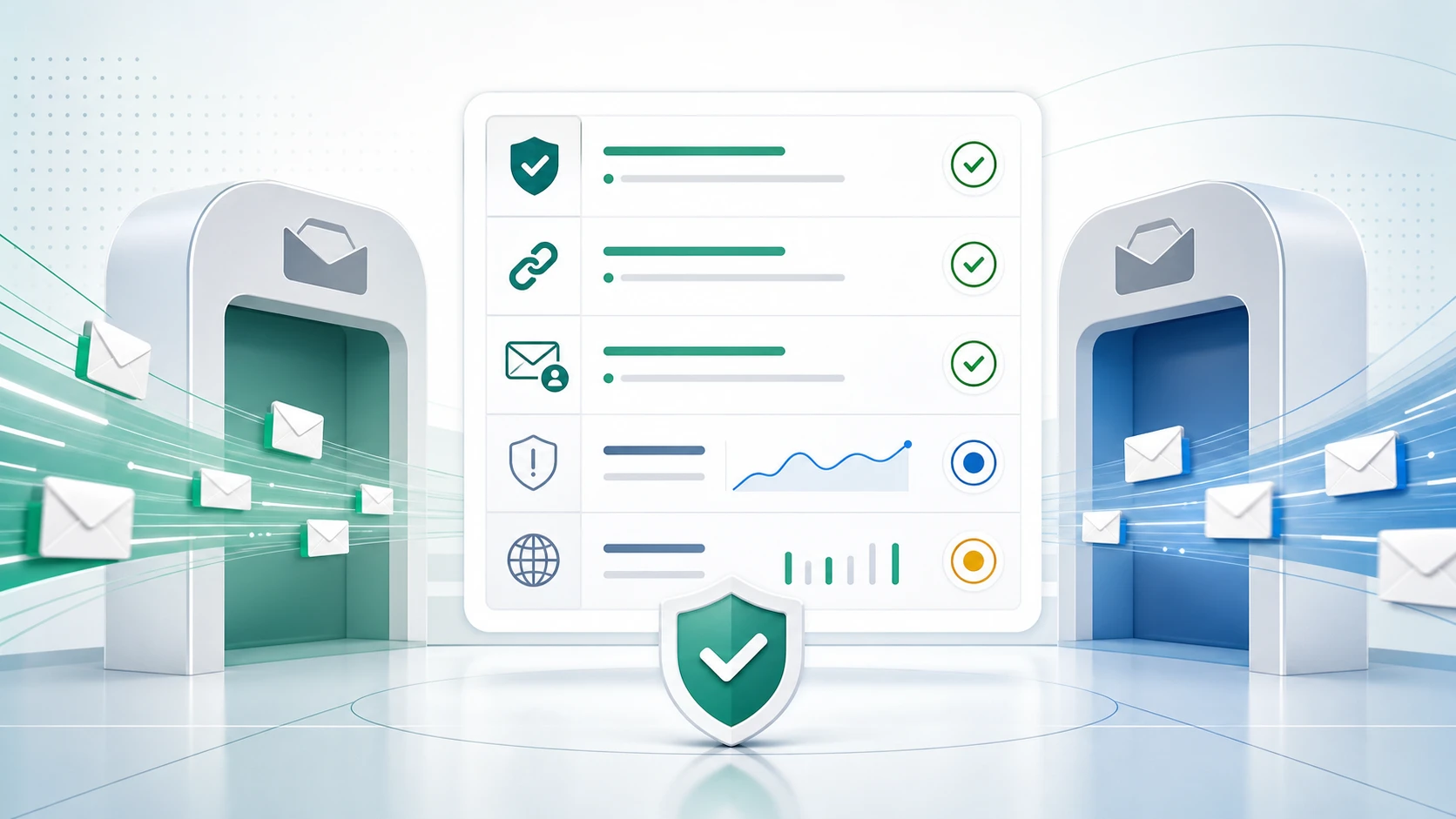 Deliverability7 min read
Google and Yahoo bulk sender rules: DMARC alignment is the floor now
Mailbox providers turned email authentication from a best practice into a delivery gate. Here is the practical checklist for domains that send at volume.
For bulk senders, DMARC alignment is no longer aspirational. SPF, DKIM, an aligned From domain, one-click unsubscribe, and complaint monitoring belong in the release checklist for every high-volume mail stream.Read the post Use case6 min read
The shadow-IT email problem: finding every tool sending mail as your domain
Most organizations can list maybe half the SaaS tools that send email on their behalf. The other half are why DMARC enforcement breaks things.
The DMARC aggregate report is, accidentally, the best SaaS inventory tool you have. Every authorized sender shows up by IP and ASN, and the unfamiliar ASN is the conversation you did not know you needed.Read the post Tech6 min read
MTA-STS and TLS-RPT: the half of email security DMARC doesn't cover
DMARC, SPF and DKIM are about who sent a message. MTA-STS is about whether the message was encrypted in flight. Most DMARC-fluent organizations have nothing in place for the inbound side.
MTA-STS forces senders to use TLS when delivering mail to you. TLS-RPT tells you when they tried and failed. Together they close a gap DMARC does not address.Read the post Use case7 min read
Higher education and alumni fraud: the email vertical nobody talks about
Universities sit on a goldmine that attackers know about and IT departments often forget: alumni relationships, donor workflows, and subdomains that grew organically for decades.
Alumni fundraising spoofs target donors with personalized wire-transfer requests from trusted university identities. The fix is enforced DMARC across every university subdomain that has ever sent mail.Read the post Use case8 min read
After an acquisition: locking down the acquired company's email domains in 30 days
M&A integration plans cover Slack, GitHub, AWS, and HRIS. They rarely cover the email domains the acquired company collected over the years, until an attacker uses one to phish new colleagues.
The risk after an acquisition is not the well-known primary domain. It is the side domains, marketing campaign domains, and defensive registrations. The 30-day playbook: inventory everything, set unused domains to hard reject plus null SPF, and monitor what remains.Read the post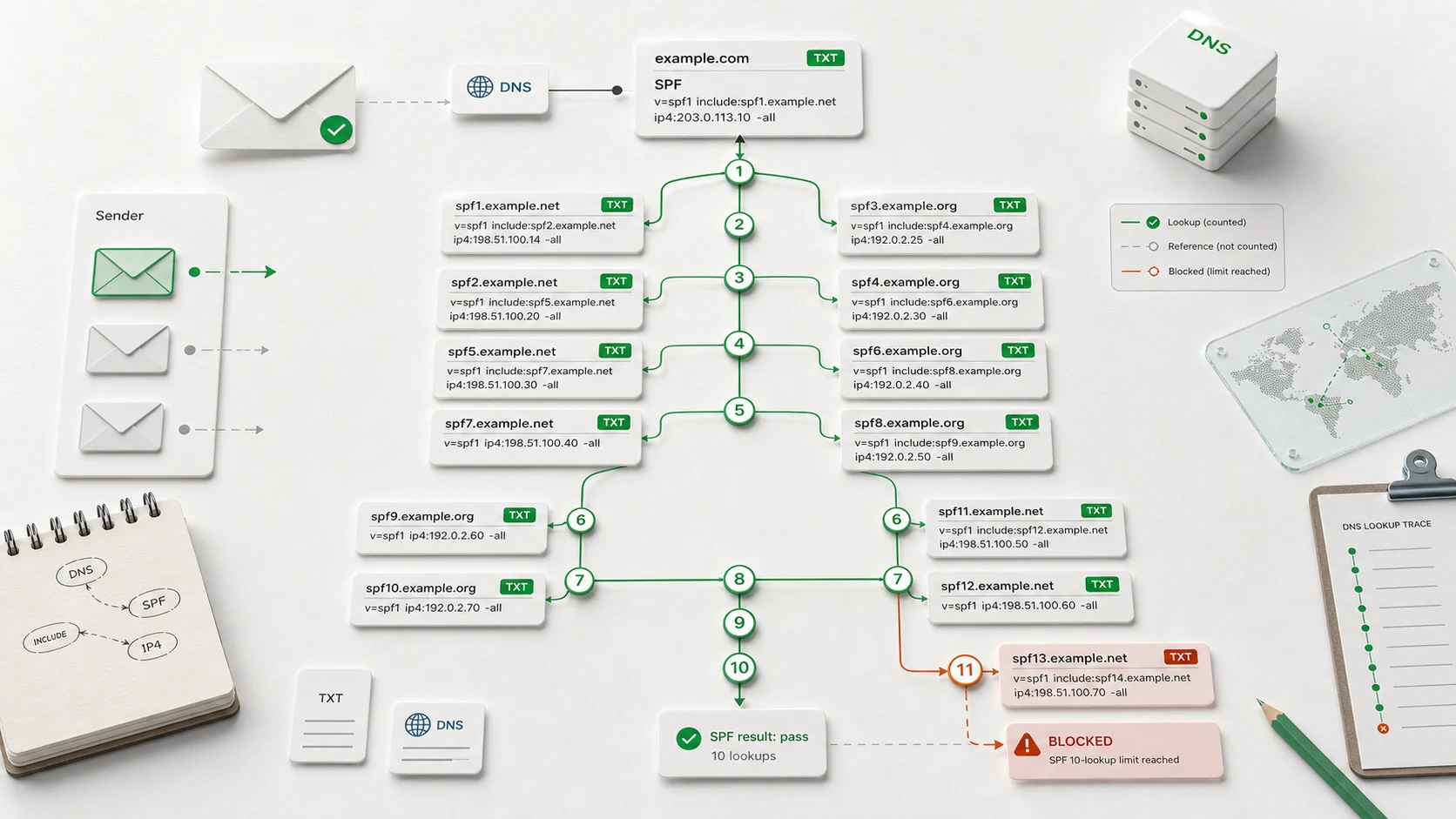 Tech7 min read
The SPF 10-lookup limit: why your record stopped working when nothing changed
SPF's 10-DNS-lookup limit is the common reason a valid-looking SPF record silently stops authorizing senders. Here is how to count it and how to fix it.
Each include, a, mx, ptr, exists, and redirect counts toward the 10-lookup ceiling, and includes count transitively. Once you exceed it, legitimate senders can fail SPF, but DKIM-aligned mail survives.Read the post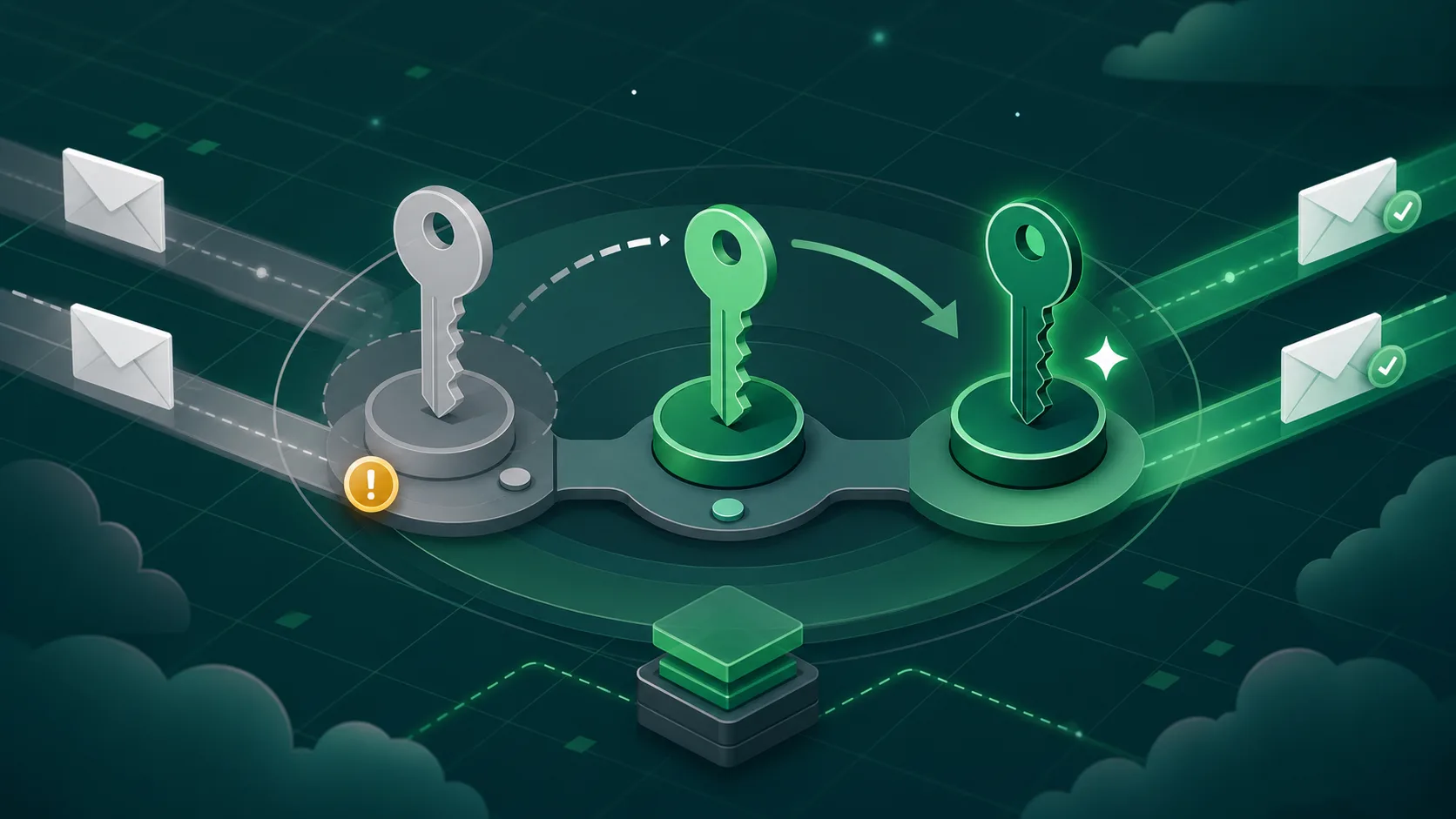 Tech7 min read
DKIM key rotation: when, how, and the silent failure mode nobody warns you about
DKIM keys do not expire. That is the problem. Here is the selector rotation pattern that prevents old keys from staying valid for years.
Rotate DKIM keys on a fixed cadence, use a new selector each time, keep the old selector briefly for queued mail, then remove it. Rotation is not complete until the old selector is gone.Read the post How DMARC works7 min read
ARC: the email standard that fixes forwarders
Authenticated Received Chain is the IETF answer to mailing-list and forwarding breakage. It is quietly carrying a meaningful share of forwarded mail.
ARC is not something most senders deploy themselves. It is a chain-of-custody signature the forwarder applies so downstream receivers can use original authentication results.Read the post Compliance8 min read
DORA and NIS2: where EU regulators land on email authentication in 2026
Neither DORA nor NIS2 names DMARC in the main regulation text, but the technical baseline points toward modern email authentication. Here is what in-scope teams should prepare.
DORA and NIS2 are outcome-based, but the email evidence is concrete: inventory domains, authenticate senders, collect reports, and prove that spoofing risk is being reduced.Read the post Compliance7 min read
PCI DSS 4.0.1 5.4.1: what "anti-phishing mechanisms" actually means
PCI DSS 4.0.1 made anti-phishing controls a hard requirement in March 2025. The guidance names DMARC, SPF and DKIM by example. Here's what auditors are usually asking for in 2026.
If you process card data, PCI 5.4.1 expects anti-phishing controls that actually enforce or quarantine. Monitor-only DMARC is visibility, not protection.Read the post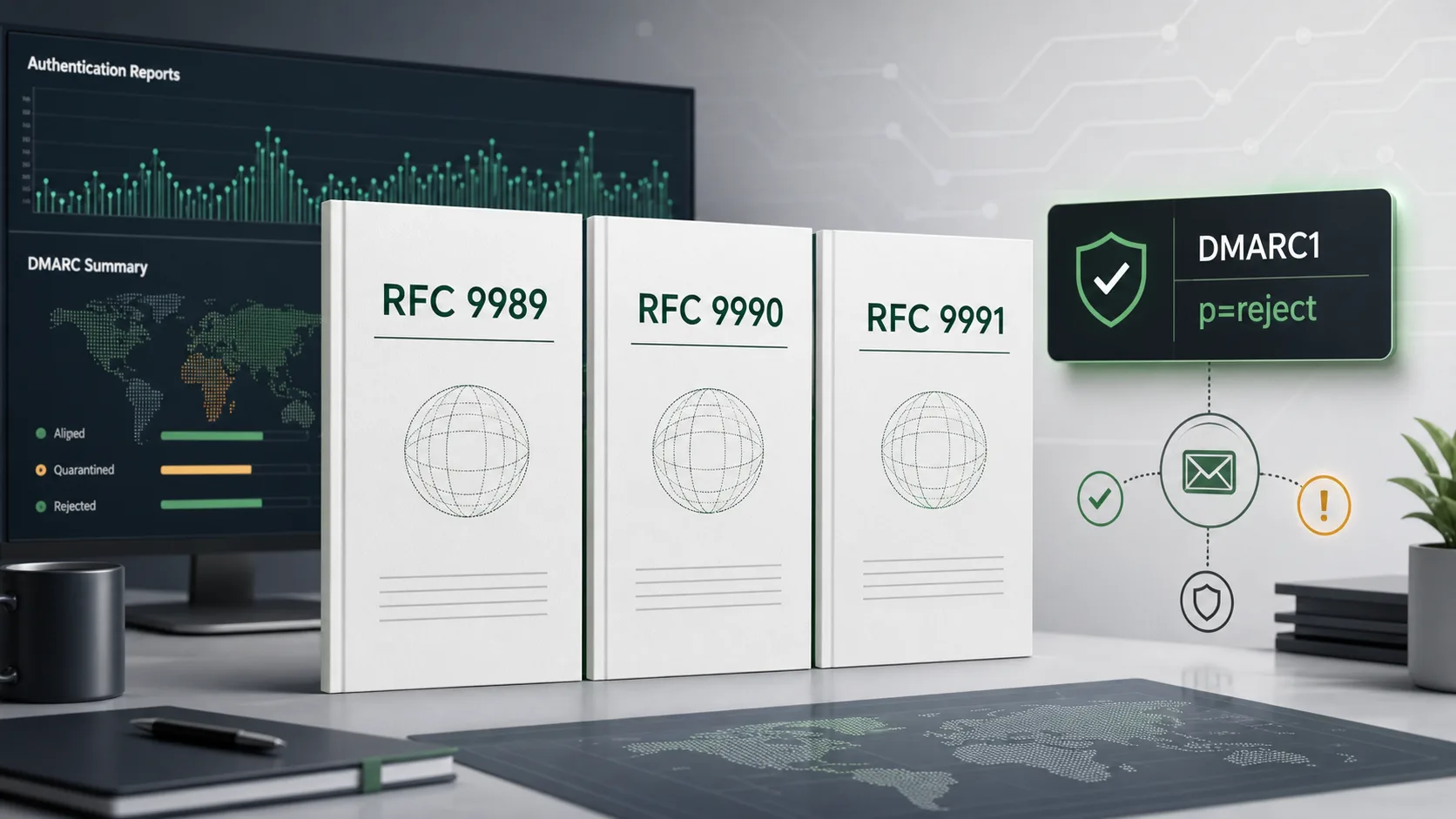 Standards7 min read
DMARC is now an IETF Proposed Standard: what changed in RFC 9989, 9990, and 9991
In May 2026, DMARC moved from RFC 7489 to three Proposed Standard RFCs. Here's what changed in policy records, DNS discovery, aggregate reports, and failure reports.
The record still says DMARC1, but the standard around it is cleaner: no pct rollout tag, DNS Tree Walk replaces PSL discovery, PSD support is explicit, and reports carry more policy context.Read the post How DMARC works5 min read
Forwarded vs spoofed: how to tell the difference in 30 seconds
Most DMARC failures are not attackers. They're mailing-list forwarders breaking SPF in a perfectly predictable way. Here's the pattern, and how DMARCify surfaces it.
Forwarding usually breaks SPF but preserves DKIM; spoofing fails alignment. That one distinction removes most false alarm.Read the post Standards6 min read
What BIMI actually requires (and why it's not a logo placement project)
BIMI's marketing pitch is "a logo next to your name in Gmail." The technical reality is much more interesting — and it starts with DMARC enforcement.
BIMI is mostly proof of control: enforced DMARC first, then a compliant SVG, certificate, and DNS record.Read the post Playbook8 min read
Going from p=none to p=reject without breaking mail
A staged rollout that reliably gets a domain to DMARC enforcement — and the three checks to run at each stage so you never lose legitimate mail.
Treat p=reject as a rollout, not a switch: observe, fix alignment, quarantine, then enforce.Read the post